

The Trinity
It is important to understand who God is, as He reveals Himself in Scripture. Otherwise, we may create our own ideas about who God should be, which can lead us into idolatry. Scripture reveals that there is only one God who eternally exists as three distinct persons: the Father, the Son, and the Holy Spirit. Although the word Trinity does not appear in the Bible, the truth it describes is taught throughout Scripture.
The doctrine of the Trinity does not teach that Christians worship three gods. Deuteronomy 6:4 declares, “Hear, O Israel: The Lord our God, the Lord is one!” In Isaiah 45:5, God says, “I am the Lord, and there is no other; there is no God besides Me.” Christians therefore worship one God—not three separate gods.
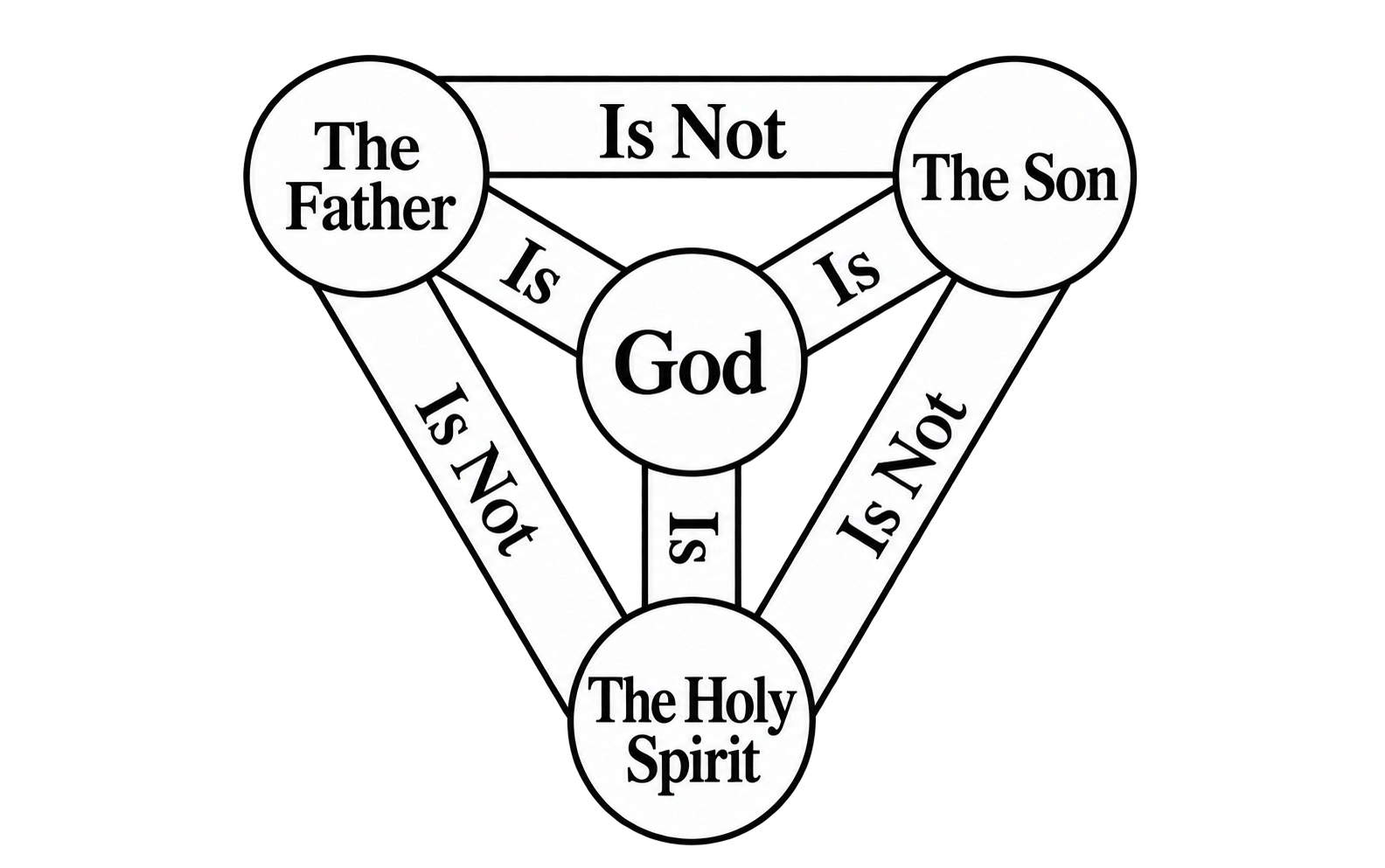
This one God eternally exists as three distinct persons: the Father, the Son, and the Holy Spirit. Each person is fully God and possesses the divine nature and attributes, including omnipresence, omniscience, omnipotence, immutability, eternality, and self-existence. However, they are not three parts that combine to form God. The Father, Son, and Holy Spirit each fully share the one undivided divine nature.
The distinction between the three persons is clearly seen at Jesus’ baptism. The Son is baptized, the Holy Spirit descends like a dove, and the Father speaks from heaven, affirming His Son. All three are present at the same time, demonstrating that they are not merely different roles played by one person. We also see their distinction when the Father sends the Son into the world and when the Son asks the Father to send the Holy Spirit.
John 1:1 also reveals both the distinction between the Father and the Son and the divinity of the Son: “In the beginning was the Word, and the Word was with God, and the Word was God.” The Word was with God, showing distinction, yet the Word was God, showing that He possesses the divine nature. John later tells us that “the Word became flesh,” identifying the Word as Jesus Christ.
The Father is not the Son, the Son is not the Holy Spirit, and the Holy Spirit is not the Father. Nevertheless, they are not three gods but one God who eternally exists as three distinct persons. The Trinity remains a profound mystery that no human explanation can fully capture. This article is therefore not an exhaustive study of the Trinity or the individual work of each person, but a brief introduction to what Scripture reveals about the triune God.
God the Father

God the Father is the creator and sustainer of all things. In Genesis 1, we are told that in the beginning God created the heavens and the earth. The word Father means source, meaning God the Father is the source of all things. All things that exist have their origin in Him. He is self-existent, meaning he does not require anything outside of Himself to exist.
As believers, we are invited to relate to God as our Father because, through our union with Christ, we have been adopted into His family (Romans 8:14–15). We can approach Him with the trust and intimacy of beloved children, calling Him “Abba, Father”—an expression of deep affection, dependence, and belonging. Through faith in Jesus Christ, we receive the full privileges of God’s children, including the assurance that we are co-heirs with Christ (Romans 8:17). John 1:12 says that all who receive Christ and believe in His name are given the right to become children of God. Likewise, Galatians 4:7 declares that we are no longer slaves but God’s children and, because we are His children, heirs through Him.
A limited understanding of God’s fatherhood can produce unhealthy patterns in our relationship with Him. Many believers serve God with the mindset of slaves rather than beloved children, working to earn His acceptance instead of living from the inheritance they have already received in Christ. Unhealed wounds from earthly fathers—such as abandonment and rejection—can also distort how we see God and create a deep sense of spiritual orphanhood. As a result, we may approach God in prayer like beggars pleading with a reluctant master rather than children confidently coming to a loving Father. Healing begins as we allow the truth of God’s character and our identity in Christ to reshape how we relate to Him.
Understanding the Father’s love is essential to our growth as believers. Although God reveals His love in many ways, His greatest demonstration of love is that He gave His only Son to die for our sins. When we receive this love by faith, it begins to heal our emotional wounds and establish our identity and worth in Christ. We no longer depend on outside approval, affirmation, or validation because the Father’s love grounds us securely in who we truly are.
Romans 5:5,” Now hope does not disappoint, because the love of God has been poured out in our hearts by the Holy Spirit who was given to us”.
Signs you struggle with an Orphan Spirit/Mindset
- Chronic feelings of rejection and abandonment. You are hyper-sensitive to possible rejection. You sometimes push people away so that they don’t reject you first.
- Constantly striving to earn love. You believe you have to perform or work hard to earn love and acceptance. You are achievement-focused because you believe your value comes from what you do.
- Struggling with self-worth: Constantly comparing yourself with others. It’s like you are not enough, which can lead to envy and jealousy
- Prone to isolation. Trouble trusting others and avoiding community and close relationships. You may refuse help from others because you feel a constant need to remain independent.
- Insecurities and the fear of abandonment or rejection. Feeling unwanted.
- Struggles with identity. You seek a sense of worth from material possessions, appearance, or work output. A neediness for validation from men. Lack of inner affirmation. You constantly search for applause and validation from others to fill an inner void.
- You view God as a harsh taskmaster who is impossible to please. You are like the brother to the prodigal son (Luke 15:29-30).
- Lack of emotional intimacy. You struggle to connect deeply with others due to your fears of abandonment and rejection. In most close relationships, people describe you as clingy.
Only the Father’s love can make you secure in yourself and rid you of the orphan mentality or spirit.
God the Son

When it comes to God the Son, many people are familiar with His role in redeeming mankind. His death on the cross is attested by many, even non-believers, with the event even found in non-biblical sources. However, when it comes to Jesus, the greatest controversy even in his time was his deity; whether He is God. Muslims acknowledge Him as a prophet, Jews view him as a great rabbi, while Hindus refer to him as the enlightened guru (sadhu).
Jesus revealed the nature, character, and essence of the Father. Some people view the God of the Old Testament as harsh, cruel, and judgmental, but this view fails to recognize that His judgments flow from His holiness, righteousness, and justice. God is immutable, meaning that He does not change in His character or divine nature; the God revealed in the Old Testament is the same God revealed in the New Testament. The Father is not the harsh member of the Godhead while Jesus is the loving one, because the Father and the Son share the same divine nature. God came in the flesh in the person of the Son to reveal clearly what the Father is truly like.
To believe in Jesus is to believe in Him as He is revealed in Scripture. When He came to earth, He was both fully human and fully divine—not half God and half man. John 1:14 tells us that “the Word became flesh and dwelt among us.” Jesus possessed a real human body and experienced hunger, weariness, sorrow, pain, and temptation, yet He remained without sin. At the same time, He was fully God, for Colossians 2:9 declares, “In Him dwells all the fullness of the Godhead in bodily form.”
Jesus came as the Lamb of God to redeem humanity from sin. By offering His life on the cross, He bore the penalty for our sins in our place. He not only died for us but also as our representative, so that through faith in Him, His righteousness is credited to us as a gift. Because of His finished work, we are placed in right standing with God, set free from the power of sin, and given eternal life (John 3:16).
Every spiritual blessing we enjoy as believers is found in Christ (Ephesians 1:3). Our position and acceptance before the Father do not rest on our efforts but on our union with Him. We are complete in Christ, and nothing needs to be added to His finished work for our salvation (Colossians 2:10). The sacrifices and regulations of the Old Testament were shadows pointing forward to Him, but Christ is the reality to which they pointed (Colossians 2:16–17). Therefore, do not allow anyone to rob you of the freedom you enjoy through your union with Christ.
Scripture references of Jesus’ deity as God
- John 1:1: “In the beginning was the Word, and the Word was with God, and the Word was God.”
- Titus 2:13: “…wait for our great God and Savior, Jesus Christ.”
- Hebrews 1:18: “But of the Son he says, ‘Your throne, O God, is forever and ever…'”
- 1 Timothy 3:16: “Great is the mystery of godliness: God was manifest in the flesh…”
- John 8:58: “Truly, truly, I say to you, before Abraham was, I AM.” I AM means ego eimi, the same title used for God in Exodus 3:14
- John 10:30: “I and the Father are one”.
- I Am statements in John: I AM the bread of life, I AM the light of the world, I AM the door/gate for the sheep, I AM the good shepherd, I AM the way, the truth and the life, I AM the resurrection and the life, and I AM the true vine.
- Revelation 1:17-18: Jesus says, “I am the first and the last.”
- Revelation 22:13: Jesus says, “I am the Alpha and the Omega, the First and the Last, the Beginning and the End”.
God the Holy Spirit

The Holy Spirit can manifest himself as wind, fire, water but his more than a force or power, He is a person with a will, intellect and emotions. The Holy Spirit is the third person of the Trinity. Not third because he is least, but third because He was the last person in the Trinity to be revealed to us.
John 14:16,” And I will pray to the Father, and He will give you another Helper, that He may abide with you forever”. The word helper translates the Greek word ‘parakletos ’, which means someone called to walk beside another. It can also be translated as comforter, counsellor, standby, advocate, mediator, or intercessor.
Another key thing to note from this passage is the usage of the word ‘another’. The word ‘another’ can be translated in two ways in Greek – ‘allos’ which means another of the same kind, or ‘heteros’, another of a different kind. Assume you have lost a silver spoon. If I were to give you another spoon made of silver, then I have given you another spoon of the same kind (allos) but not the same spoon. Alternatively, if I were to give you another spoon but this time made of wood, I have given you another spoon but of a different kind (heteros). In this passage, Jesus is referring to the first another – allos. He is saying I was a helper (parakletos) to you while on earth but when I leave, I will send you another parakletos – not me – but in nature and essence the same as me. If you want to learn what the nature and essence of the Holy Spirit looks like, then look to Jesus.
Whom Jesus was to his disciples is what the Holy Spirit is to us.
Finally, Jesus promised that the Holy Spirit would come to dwell with His followers forever (John 14:16). Under the Old Covenant, the Spirit came upon certain people to empower them for specific assignments and could withdraw that empowerment when they persistently disobeyed Him. Under the New Covenant, however, the Holy Spirit permanently indwells and seals every believer as God’s own.
The Grief of the Holy Spirit
Ephesians 4:30, “And do not grieve the Holy Spirit of God, by whom you were sealed for the day of redemption”
One common misconception about the Holy Spirit is that His presence in a believer works like a light switch—on when we obey God and off when we sin. Some imagine that when they give in to sin-whether by viewing pornography or knowingly entering a sexually compromising situation- the Holy Spirit temporarily leaves and returns only after they repent. Scripture teaches, however, that the Holy Spirit dwells within believers and seals them as God’s own. We cannot simply “leave Him at home” while we pursue sin; He remains present, and our disobedience grieves Him and disrupts our fellowship with God. Understanding what it means to grieve the Holy Spirit helps us recognize that His grief is evidence of His loving presence, not His temporary absence.
The Holy Spirit permanently abides in a believer. So, when we sin, we drag him into our sin. That’s why He grieves. His passionate, jealous love for us groans for us to be his own. This wrong theology existed in the church in Corinth. They thought he dwelt in them on Sunday, then throughout the week He would leave, and they would engage in sensuality.
You know you are walking very closely with the Holy Spirit when the pain of grieving Him is greater than the gain from the pleasure of sin. It’s like you weigh matters like an accountant – one side assets, the other liabilities, or a weighing machine. Sin loses its grip on you when the very thought of grieving him through a pleasure – the pain is greater than the pleasure itself.
The pain of broken fellowship means more to you than the pleasure. He knows everything about you, yet he chooses to love you. The Spirit jealously wants you as his own like a passionate lover. It’s a protective love that desires our undivided devotion to Him. We provoke him to jealousy with our worldly pursuits and idols.
His grief is for you. It is the grief of what sin does to you. It’s the grief of choosing the world over him. His grief is not abandonment, but correction, so you may be restored to fellowship with Him again. His grief restrains the flesh.
Scriptures: Holy Spirit as God
- Acts 5:3-4; Peter tells Ananias that they have not lied to human beings but to God.
- Matthew 28:19; We are commanded to baptize in the name of the Father, Son, and Holy Spirit.
- 2 Corinthians 13:14; in the words of the Grace, we say and the fellowship of the Holy Spirit putting the Father’s love and Son’s Grace at par with the Holy Spirit role.
- 1 Corinthians 3:16: we are told our bodies are temples of the Holy Spirit
Final thoughts
Jesus did not die for us to have more rules and regulations but for us to have relationship. The Trinity is relational. It is widely believed that we pray to the Father, in the name of the Son and through the enabling power of the Holy Spirit. However, this does not mean that there is disunity within the Trinity. God is one. It is not that the persons of the Trinity compete for attention, and there is a specific prayer number for each. When you pray to one you pray to all.
A Special thanks to Gospel Images


Discover more from Joseph Muchiri
Subscribe to get the latest posts sent to your email.